← All field notes
Excavation & site work guide

What does it take to fix a driveway, a wet spot, or a piece of raw ground?

Gravel, grading, drainage, and clearing: what we check before a machine shows up, and what the work actually involves.

The short version

Dirt work is where most property problems start, and where most of them get fixed. A driveway that ponds, a yard that stays soft into May, a pad that has to be dead level: each one is a question about water and base, not about how much gravel gets dumped on top.

Before a machine shows up we walk the grade, find where the water comes from and where it needs to go, and check what is buried under the work area.

Excavation & site work services
Questions we get
01

Why does my gravel driveway keep getting potholes?

Almost always the base. Gravel pushed into soft clay leaves a dip, the dip holds water, and the water makes the next soft spot. Adding more stone on top buys a month. Cutting out the bad material, shaping a crown, and building the base back in compacted layers is what makes it stay put.

02

Do I need a culvert or a ditch?

Water has to go somewhere. If the ground above your driveway sheds onto it, a shallow ditch along the uphill side and a culvert at the crossing is usually far cheaper than rebuilding the driveway every other year. We mark where the water wants to run before anything gets dug.

03

What does land clearing include?

Cutting, piling, stumps, and disposal are four separate costs. Whether stumps are ground in place or pulled changes what the ground is good for afterward, and slash has to be burned in season or hauled. We price all of it together so there is no surprise pile left sitting.

04

How long does a job take?

A driveway rebuild is usually a day or two. A pad or a small clearing runs a few days depending on how much material moves and where it goes. We give you a window when we quote it, and call if the ground turns out worse than it looked.

Before you call

What to have ready

  • Photos of the problem from a few angles
  • Where the water sits now after a rain
  • Any survey, septic, or utility information you have
  • What the ground needs to do when we are done

Notes on this work

All field notes
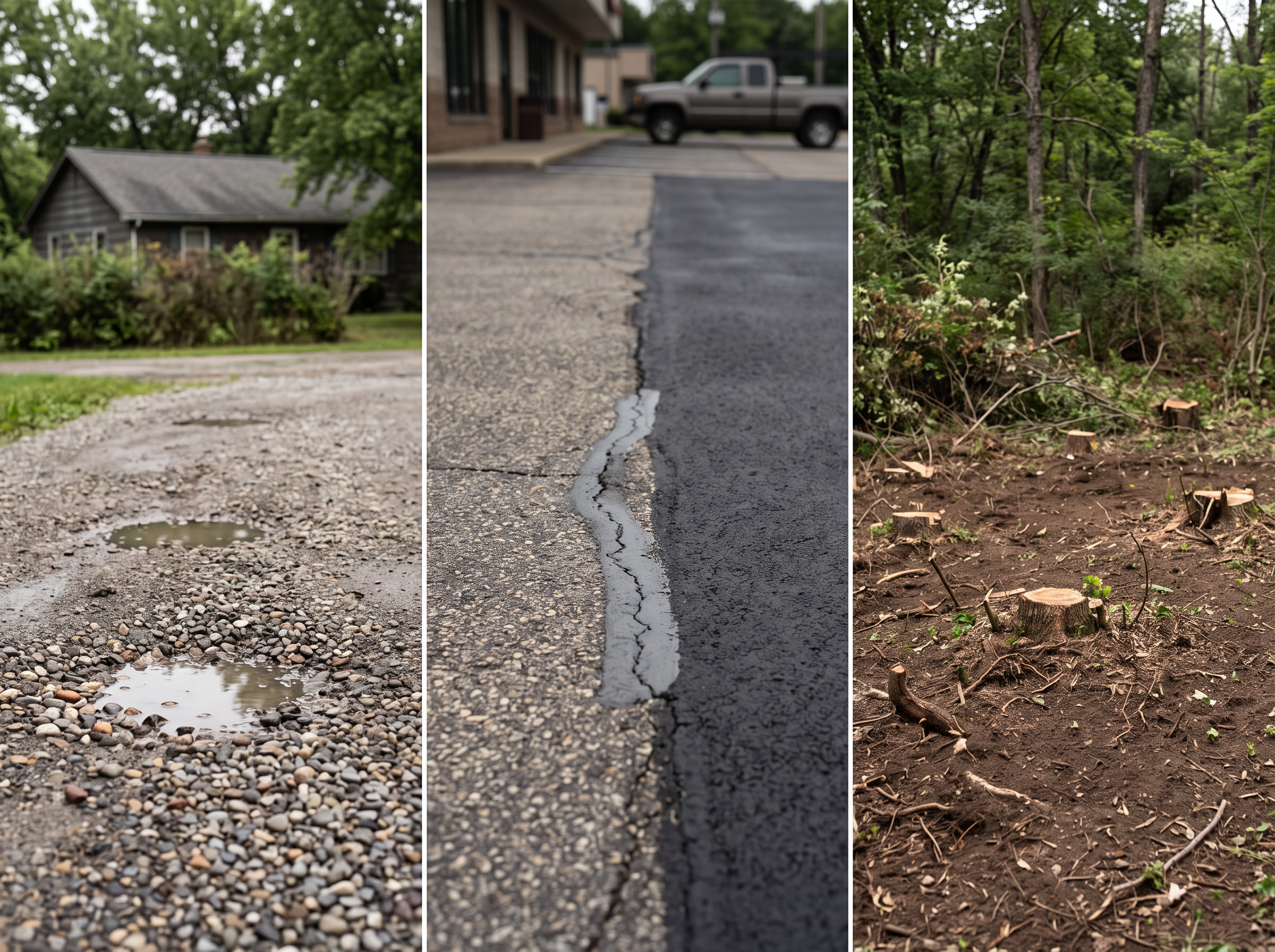
Potholes holding water in a loose gravel driveway in front of a dark wood-sided rural house
November 2026 · Excavation

Why a gravel driveway turns into potholes

Almost every gravel driveway that goes bad was built thin, or it was built flat. Neither shows up until the second wet winter.

Read the note

A driveway is only as good as the ground under it. On most of the lots around Eugene and Springfield there is clay under a few inches of topsoil, and clay holds water. Put four inches of gravel on that and drive a truck over it in January, and the gravel gets pushed down into the soft spot. What is left is a dip that holds the next rain, and that is your first pothole.

The fix is not more gravel on top. It is cutting the soft material out, shaping a crown so water runs off to the sides, and building the base back up in layers that get compacted. Then the surface stone stays where you put it and the driveway carries weight instead of absorbing it.

If your driveway has a low spot every spring, a rut along one tire line, or gravel that keeps working its way to the edges, the base is the part that needs attention. That is a day of machine work, not a whole new driveway.

Freshly cut tree stumps in dark turned soil at the edge of a dense stand of trees
September 2026 · Land clearing

Before you clear brush on acreage

The cutting is the easy part. What happens to the stumps, the dirt, and the water is what decides whether the ground is usable afterward.

Read the note

Clearing a piece of ground changes where water goes. Take out the brush and small trees on a slope and the rain that used to be caught up there now runs straight down. If the cleared edge sits above a driveway, a shop, or a neighbor's fence, that water arrives somewhere it did not used to. Plan the drainage before the machine shows up, not after the first storm.

Stumps are the other decision. Grinding them leaves the root mass rotting in place, which settles over a couple of seasons and leaves soft spots in anything built on top. Pulling them takes the roots with them but leaves a hole that has to be backfilled and compacted with clean material. Which one you want depends on whether that ground is going to be a lawn, a pad, or just open space.

Brush and timber have to go somewhere too. Burning is allowed in much of Lane County only in open burn season and only with the right clearance, and hauling is a cost that is easy to underestimate. We price the disposal with the clearing so nobody is surprised by a pile that has to sit there until fall.

Contact

Get a free quote for your job

Send the details and a photo if you have one. We will tell you what it takes and when we can get to it.

optional
optional
Property type
optional
Photo

A phone photo helps us quote faster. Files are stored privately.

Free estimates. We use your details only to get back to you about this job.

Prefer to talk? 541-654-9654No charge for an estimate.